

Flowerwood
Orange Rocket® Barberry – 1 Gallon
Orange Rocket® Barberry – 1 Gallon
Share
Berberis thunbergii ‘Orange Rocket’ PP18411
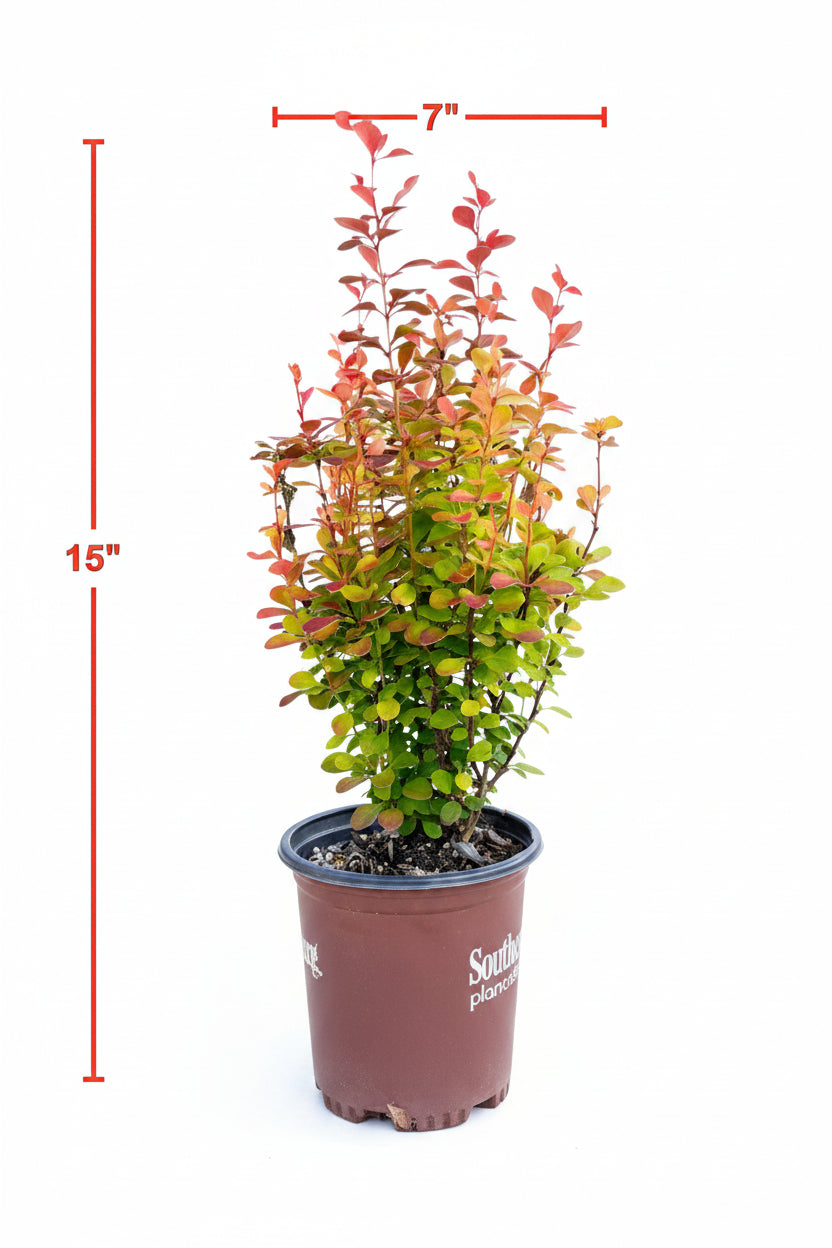
Bring bold, designer-worthy color to the landscape with Orange Rocket® Barberry. This compact, upright shrub is loved for its brilliant foliage and naturally narrow habit. New growth emerges in vivid coral-orange tones in spring, deepening to rich red and ruby shades as the season progresses. In fall, the foliage becomes an even more intense scarlet-red before dropping for winter.
Its narrow growth habit makes Orange Rocket especially useful where you want strong color without a shrub that takes up a lot of space. Use it beside an entry, in foundation beds, as a colorful accent among evergreens, in mass plantings, or as a vertical element in mixed borders.
Plant at a Glance
Botanical Name: Berberis thunbergii ‘Orange Rocket’ PP18411
Common Name: Orange Rocket Barberry
Container Size: 1 Gallon
Plant Type: Woody ornamental shrub
Annual or Perennial: Perennial
Evergreen or Deciduous: Deciduous — loses its foliage during winter
USDA Hardiness Zones: 5–9
Mature Height: Approximately 4 feet tall
Mature Width: Approximately 1½–2 feet wide
Growth Habit: Narrow, upright and compact
Growth Rate: Moderate
Sunlight: Full sun to part shade
Best Color: Plant in full sun for the richest orange and red foliage
Water Needs: Low to moderate once established
Deer Resistance: Good
Foliage Color: Coral-orange, red and ruby
Flowers: Grown primarily for foliage rather than flowers
Bloom Season: No significant ornamental flowering season
Fall Interest: Excellent ruby-red foliage
Orange Rocket’s commonly listed mature dimensions are approximately 4 feet tall by 1½ feet wide, making it considerably narrower than many traditional barberries.
Why We Love Orange Rocket
Orange Rocket gives you the impact of a colorful specimen plant without requiring a large footprint. Its upright form is perfect for adding height between lower shrubs and perennials, and the foliage provides interest from the moment new growth appears in spring until the leaves drop in late fall.
The changing foliage is what makes this shrub special:
Spring: Bright coral-orange new growth
Summer: Deepening orange-red to ruby foliage
Fall: Intense ruby-red color
Winter: Deciduous; branches remain bare until spring growth returns
It is also considered an easy-care, deer-resistant and water-wise landscape shrub once established.
Sunlight Requirements
Plant Orange Rocket in full sun to part shade.
For the brightest and most dramatic foliage, Wright’s Market recommends planting it where it receives at least 6 hours of direct sunlight per day. Plants grown in heavier shade may develop more green coloration and less of the fiery orange-red color Orange Rocket is known for.
Watering
Immediately after planting: Water thoroughly.
First growing season: Keep the root ball consistently moist but never waterlogged while the plant establishes.
A good starting point during warm weather is approximately 2–3 waterings per week, adjusting for rainfall, soil type and temperature.
Once established: Orange Rocket has relatively low water requirements. Water deeply during extended hot or dry periods rather than providing frequent shallow watering.
Avoid keeping the soil constantly saturated.
Fertilization
Fertilize once in early spring as new growth begins.
Use a balanced, slow-release shrub and tree fertilizer according to the product directions. A balanced granular fertilizer such as 10-10-10 may also be used when appropriate for your soil.
Avoid excessive fertilizer, which can encourage overly soft growth rather than maintaining the plant's naturally compact habit.
Planting Instructions
- Water the plant thoroughly while it is still in its container.
- Choose a location with full sun to part shade and well-drained soil.
- Dig a hole approximately twice as wide as the root ball, but no deeper than the root ball.
- Remove the plant from its pot and gently loosen tightly circling roots.
- Position the plant so the top of the root ball sits approximately 1–2 inches above the surrounding soil level.
- Backfill with the existing soil and gently firm around the roots.
- Water deeply after planting.
- Apply approximately 1–2 inches of mulch, keeping mulch away from direct contact with the stems.
Soil
Orange Rocket adapts to a variety of soils and performs well in average garden soil as long as drainage is adequate.
It can tolerate many native and clay-based soils once established.
Pruning & Maintenance
Orange Rocket naturally maintains an attractive upright shape, so heavy pruning is generally unnecessary.
Remove damaged or dead branches as needed. If shaping is desired, lightly prune during the dormant season or in late winter before new spring growth begins.
Because barberry stems can have sharp thorns, wear gloves when planting or pruning.
Does Orange Rocket Barberry Flower?
Orange Rocket is selected primarily for its dramatic foliage rather than its flowers. Any flowers are small and inconspicuous and are not considered a major ornamental feature. Southern Living Plant Collection lists its flowering season as none, emphasizing the foliage as the primary attraction.
Zone 9 / Coastal Georgia Performance
Orange Rocket is hardy through USDA Zone 9, making it suitable for many landscapes in southeast Georgia.
In our hot Southern climate, provide adequate water during establishment and prolonged summer droughts. Full sun produces the strongest foliage color, although a location with some afternoon protection can be helpful in exceptionally hot, reflected-heat locations.
Because Orange Rocket is deciduous, it will lose its leaves during winter. This is completely normal. Fresh colorful foliage returns when temperatures warm in spring.
Landscape Uses
Orange Rocket is beautiful used as a:
- Colorful foundation accent
- Vertical element in mixed flower beds
- Entryway accent
- Low informal hedge
- Mass planting
- Specimen shrub
- Contrast plant against dark green evergreens
- Accent among ornamental grasses and perennials
- Container specimen while young
Its narrow habit is particularly helpful in smaller landscape beds where you need height without excessive width.
Plant Pairings
For a polished Southern landscape, pair Orange Rocket Barberry with:
Evergreen structure:
Dwarf Burford Holly
Soft Touch Holly
Jade Distylium
Podocarpus
Soft contrasting foliage:
Carex ‘Everillo’
Feather Falls Carex
Liriope
Flowering companions:
White or Peach Drift® Roses
White Encore® Azaleas
Hydrangeas
Salvia
Lavender
One of our favorite combinations is Orange Rocket Barberry + creamy white flowers + chartreuse foliage + deep evergreen shrubs. The contrast makes the coral-red foliage stand out beautifully without making the landscape feel overly busy.
Plant Meaning & Garden Personality
The strong, upright form and vibrant changing color of Orange Rocket can symbolize energy, confidence and transformation. It is an excellent choice when you want one plant to bring a strong designer element to an otherwise neutral green landscape.
Why Wright’s Market Loves It
We love Orange Rocket because it delivers big color in a small footprint. Its narrow form makes it incredibly versatile, while the coral, orange and ruby foliage adds the kind of layered color that makes a professionally designed landscape feel finished.
It is especially beautiful in Southern gardens when mixed with deep greens, creamy whites and soft chartreuse foliage.
Wright’s Market Plant Tip
Give Orange Rocket plenty of sunlight if brilliant color is your goal. The more appropriate sun exposure it receives, the better its orange and ruby foliage will generally show.
Please note: Plant appearance, fullness, height and seasonal color naturally vary throughout the year. A 1-gallon plant is a young plant and will continue developing toward its mature size once established in the landscape.