
Flowerwood
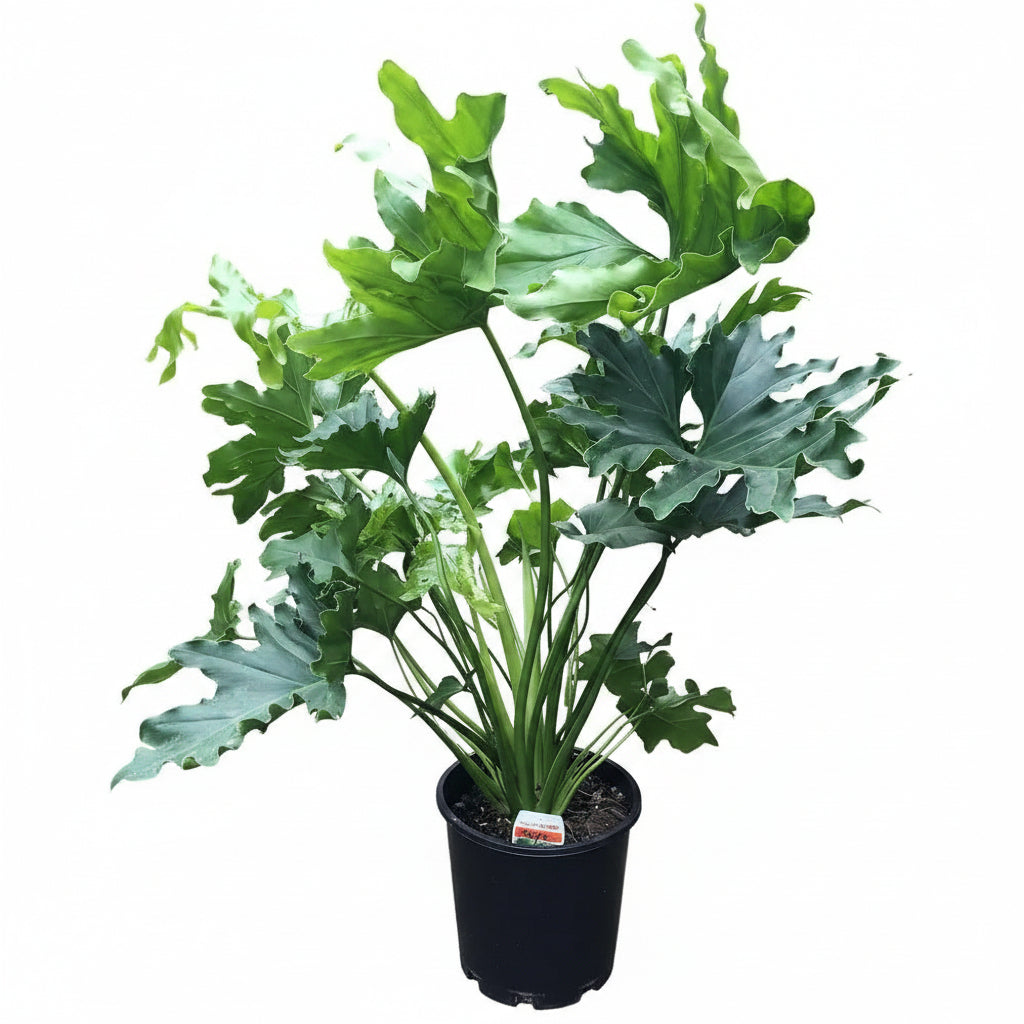
Split Leaf Philodendron – 3 Gallon
Split Leaf Philodendron – 3 Gallon
Share
Thaumatophyllum bipinnatifidum
formerly Philodendron bipinnatifidum / Philodendron selloum
Create a lush, tropical look with Split Leaf Philodendron, a bold evergreen perennial known for its oversized, deeply cut leaves and dramatic architectural form. This is one of the best foliage plants for creating a tropical or resort-style feeling around patios, porches, pools, shaded beds, and protected foundation areas.
Its glossy green leaves can become several feet long, giving the landscape instant texture and presence. In warm climates, mature plants can develop into substantial specimens with thick stems and aerial roots.
Plant at a Glance
Botanical Name: Thaumatophyllum bipinnatifidum
Former Botanical Names: Philodendron bipinnatifidum, Philodendron selloum
Common Names: Split Leaf Philodendron, Tree Philodendron, Lacy Tree Philodendron
Container Size: 3 Gallon
Plant Type: Tropical broadleaf perennial / evergreen shrub
Annual or Perennial: Perennial
Evergreen or Deciduous: Evergreen in frost-free and mild climates; may suffer foliage damage during freezes
USDA Hardiness Zones: Generally 9–11
Mature Height: Approximately 4–10 feet, potentially larger in ideal frost-free conditions
Mature Width: Approximately 6–10 feet, with mature specimens sometimes becoming larger
Growth Habit: Upright, spreading, tropical and architectural
Growth Rate: Moderate
Sunlight: Part shade, filtered sun or morning sun with afternoon shade
Water Needs: Moderate; prefers consistent moisture
Foliage: Large, glossy, deeply lobed green leaves
Flowers: Yes, on mature outdoor plants
Bloom Season: Seasonal; flowering is uncommon on young plants
Flower Appearance: Creamy-white spadix surrounded by a greenish to reddish-purple spathe
Primary Feature: Dramatic tropical foliage
Why We Love Split Leaf Philodendron
Split Leaf Philodendron gives a landscape an immediate lush, established, Southern tropical feel.
Its enormous leaves create texture and movement that smaller shrubs simply cannot provide. It works beautifully as a statement plant in a shaded bed or as part of a layered tropical planting.
A single mature plant can become a significant landscape feature, so this is one plant where proper spacing is especially important.
Sunlight Requirements
Split Leaf Philodendron performs best in:
Part shade
Dappled sunlight
Bright filtered light
Morning sun with afternoon shade
Too much intense direct sun can scorch the foliage, especially during hot Southern afternoons. Missouri Botanical Garden recommends part shade, particularly morning sun with afternoon protection.
Wright’s Market Recommendation
For southeast Georgia, we prefer:
Morning sun + afternoon shade
or
Bright filtered light beneath taller trees
This typically produces large, rich-green leaves while reducing summer leaf scorch.
Watering
Split Leaf Philodendron appreciates consistent moisture.
Immediately After Planting
Water deeply after planting so the root ball and surrounding soil are thoroughly moistened.
First Growing Season
Water approximately 2 times per week, adjusting for:
- Rainfall
- Summer heat
- Soil type
- Sun exposure
During very hot, dry weather, newly planted 3-gallon plants may require additional water.
Once Established
Continue watering during prolonged dry periods.
This plant prefers moist soil and is not highly drought tolerant, but the soil should still drain properly. Constantly saturated soil can lead to root rot.
Fertilization
Fertilize in spring as active growth begins.
Use a balanced, slow-release landscape fertilizer according to package directions.
A second light feeding can be made during early summer if growth or foliage color appears weak.
For container-grown plants, use a fertilizer suitable for tropical foliage plants.
Avoid excessive fertilization, which can produce overly soft growth.
Planting Instructions
- Water the plant thoroughly while it is still in its 3-gallon container.
- Choose a location with filtered sunlight or part shade.
- Make sure there is enough space for its substantial mature width.
- Dig a hole approximately twice as wide as the root ball, but no deeper.
- Carefully remove the plant from its container.
- Gently loosen tightly circling roots.
- Position the plant so the top of the root ball sits level with or slightly above the surrounding soil.
- Backfill with the existing soil.
- Water thoroughly.
- Apply approximately 2 inches of mulch or pine straw, keeping it away from the main stem.
Soil
Split Leaf Philodendron prefers:
Rich soil
High organic matter
Consistent moisture
Good drainage
NC State recommends moist, well-drained soil with high organic matter.
Adding compost when preparing the surrounding bed can help improve soil structure and moisture retention.
Pruning & Maintenance
Split Leaf Philodendron is relatively low maintenance.
Remove:
- Yellow leaves
- Damaged leaves
- Cold-damaged foliage
- Older leaves that naturally decline
Cut individual leaves near the base rather than shearing the entire plant.
Mature specimens may develop visible trunks, aerial roots and a more sprawling appearance over time. This is part of the plant's natural character.
Does Split Leaf Philodendron Flower?
Yes, mature plants can flower.
Flowers consist of a spadix surrounded by a spathe, somewhat similar in form to a peace lily flower.
The spathe may be greenish, creamy-white or tinged reddish-purple.
Flowering is generally:
Seasonal and occasional
Young plants are primarily grown for foliage, and it may take many years for mature plants to flower.
Evergreen or Deciduous?
Split Leaf Philodendron is a broadleaf evergreen tropical perennial.
In warm climates, it maintains foliage year-round.
In colder portions of its growing range, freezing temperatures may damage or kill the foliage.
Zone 9 / Coastal Georgia Performance
Split Leaf Philodendron can perform beautifully in Zone 9a, but cold protection should be considered.
NC State lists it for Zones 9a–11b, while UF/IFAS notes that hard freezes can damage plants in northeast Florida.
Wright’s Market Recommendation for Southeast Georgia
Plant it in a protected location, such as:
- Near the house
- Beneath a tree canopy
- Inside a courtyard
- On the east side of a home
- Near a covered patio
- In a protected pool garden
During significant freezes, foliage can be damaged.
Established plants may return from protected stems or roots after mild cold damage, but severe freezes can cause more extensive injury.
Landscape Uses
Split Leaf Philodendron is beautiful used as a:
- Tropical specimen plant
- Poolside accent
- Shaded foundation plant
- Porch or patio accent
- Large container plant
- Woodland-edge planting
- Tropical garden centerpiece
- Back-of-bed foliage plant
- Accent beneath mature trees
Its large scale makes it especially effective when you need one substantial plant rather than many small shrubs.
Spacing
This plant needs more room than it may appear to need when you purchase it.
Allow approximately 6–10 feet of eventual width in the landscape.
Avoid planting immediately beside:
- Narrow walkways
- Doorways
- Small windows
- Tight corners
- HVAC equipment
Wright’s Market Tip
A 3-gallon Split Leaf Philodendron may look small when planted, but mature plants can become very large tropical specimens.
Give it room from the beginning.
Beautiful Plant Pairings
Split Leaf Philodendron pairs beautifully with:
Evergreen Structure
Illicium
Vintage Jade® Distylium
Soft Touch® Holly
Podocarpus
Shade-Loving Texture
Farfugium
Ferns
Carex
Liriope
Aucuba
Flowering Companions
Hydrangeas
Gardenias
Camellias
Shade-tolerant Encore® Azaleas
Wright’s Market Designer Combination
Try:
Split Leaf Philodendron + Farfugium + ferns + Carex + evergreen Illicium
The Philodendron provides the large architectural foliage, while the smaller plants create layers of texture underneath.
This combination creates a lush, sophisticated Southern shade garden without requiring a large number of different colors.
Important Safety Note
Split Leaf Philodendron contains calcium oxalate crystals and should not be eaten.
Keep plant material away from children and pets that may chew foliage. NC State classifies the plant as having poisonous characteristics if ingested.
Why Wright’s Market Loves It
We love Split Leaf Philodendron because very few plants create this much impact with foliage alone.
It offers:
Huge architectural leaves
Evergreen tropical character
Excellent shade performance
Low maintenance
Beautiful texture
Strong Southern garden personality
For customers wanting their landscape to feel lush, established and a little more tropical, Split Leaf Philodendron is an excellent choice.
Wright’s Market Plant Tip
Give Split Leaf Philodendron morning sun or filtered light, afternoon protection, consistent moisture and plenty of room to grow.
The better the location, the larger and more dramatic those signature deeply divided leaves can become.
Please note: Plant height, width, foliage size and fullness vary by season and growing conditions. A 3-gallon Split Leaf Philodendron is a young landscape plant and will continue developing toward its much larger mature size after planting.