
Wright's Market
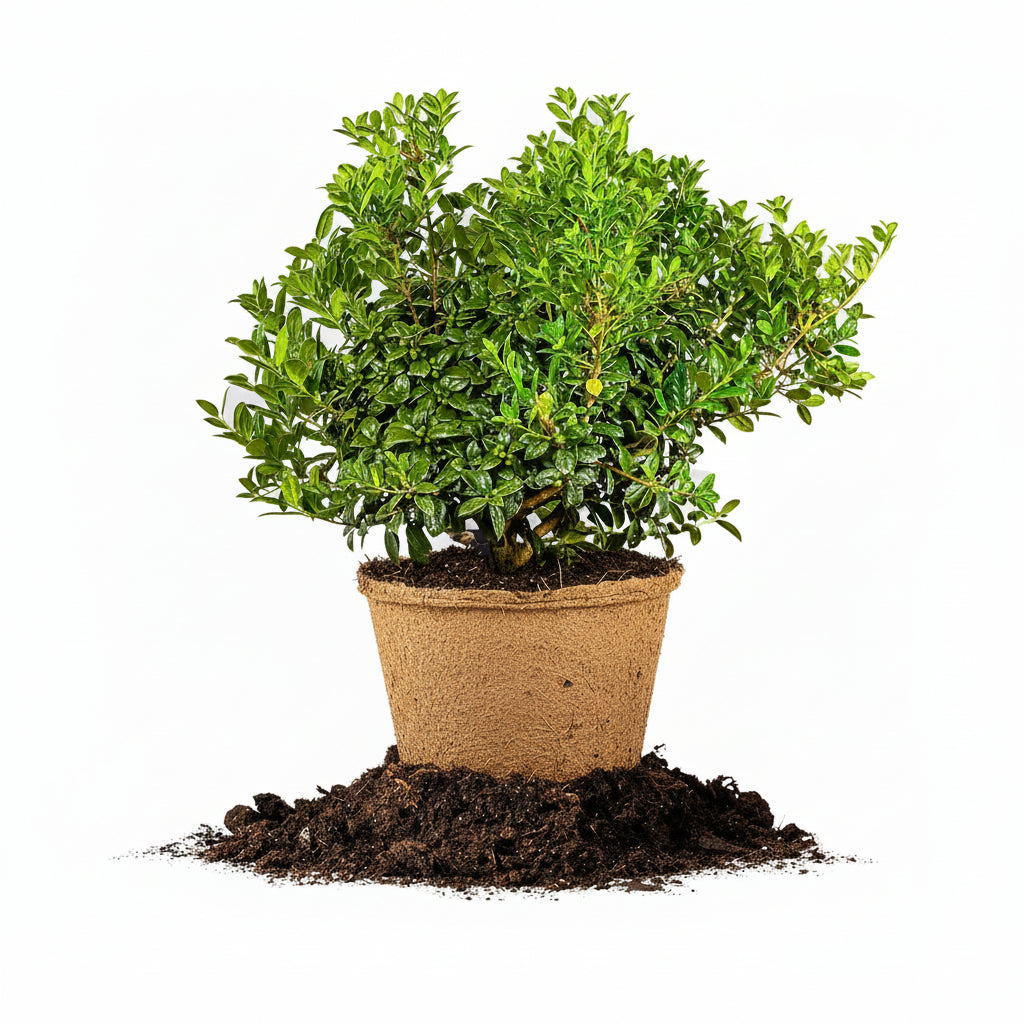
Dwarf Burford Holly (3 Gallon)
Dwarf Burford Holly (3 Gallon)
Share
Ilex cornuta ‘Burfordii’
Add dependable, year-round structure to the landscape with Burford Holly, a classic Southern evergreen shrub known for its glossy dark-green foliage, dense growth habit, and bright red berries in fall and winter.
Burford Holly is a versatile choice for foundation plantings, hedges, privacy screens, property lines, and large landscape beds. It handles heat and humidity well and responds beautifully to pruning, making it equally useful in formal or more natural Southern landscapes.
Plant at a Glance
Botanical Name: Ilex cornuta ‘Burfordii’
Common Name: Burford Holly
Container Size: 3 Gallon
Plant Type: Large evergreen shrub
Annual or Perennial: Perennial
Evergreen or Deciduous: Evergreen
USDA Hardiness Zones: Generally 7–9
Mature Height: Approximately 10–15 feet tall
Mature Width: Approximately 8–12 feet wide
Growth Habit: Dense, upright, rounded and broad
Growth Rate: Moderate to fast
Sunlight: Full sun to part shade
Water Needs: Moderate while establishing; drought tolerant once established
Foliage: Glossy, deep green
Flowers: Yes
Bloom Season: Spring
Flower Color: Small white flowers
Berries: Bright red berries typically develop in fall and may persist into winter
Primary Feature: Evergreen structure with attractive winter berries
Why We Love Burford Holly
Burford Holly is one of those dependable shrubs that gives a landscape a strong evergreen backbone.
It grows large enough to create privacy or substantial foundation structure, while its glossy foliage keeps the landscape looking full and established year-round.
In fall and winter, the bright red berries add seasonal interest and classic Southern color.
Sunlight Requirements
Burford Holly performs well in:
Full sun to part shade
For the densest growth and best berry production, provide approximately 6 or more hours of sunlight per day when possible.
It can tolerate partial shade, but heavier shade may reduce flowering and fruiting.
Wright’s Market Recommendation
In southeast Georgia, Burford Holly performs beautifully in full sun when properly watered during establishment.
It can also thrive in locations with morning sun and afternoon shade.
Watering
Immediately After Planting
Water deeply after planting so the entire root ball and surrounding soil are thoroughly moist.
First Growing Season
Water approximately 1–2 times per week, adjusting for rainfall, heat, and soil type.
During prolonged summer heat, newly planted 3-gallon shrubs may require additional water.
Once Established
Burford Holly becomes relatively drought tolerant.
Water deeply during extended dry periods rather than providing frequent shallow irrigation.
Avoid keeping the soil constantly saturated.
Fertilization
Fertilize in early spring as new growth begins.
Use a balanced, slow-release shrub fertilizer or a fertilizer formulated for hollies and other acid-loving shrubs.
A light second feeding may be applied in early summer if needed.
Avoid excessive nitrogen, which can encourage overly rapid growth and increase pruning needs.
Planting Instructions
- Water the plant thoroughly before planting.
- Choose a location with full sun to part shade and adequate room for its mature size.
- Dig a hole approximately twice as wide as the root ball, but no deeper.
- Carefully remove the plant from its 3-gallon container.
- Gently loosen any tightly circling roots.
- Position the top of the root ball level with or slightly above the surrounding soil.
- Backfill with the existing soil.
- Water deeply to settle the soil.
- Apply approximately 1–2 inches of pine straw or mulch.
- Keep mulch pulled slightly away from the main stems.
Soil
Burford Holly performs best in:
Moist, well-drained soil
Slightly acidic soil
Average to moderately fertile garden soil
It adapts to a wide range of Southern soils once established.
Good drainage is important.
Pruning & Maintenance
Burford Holly responds very well to pruning.
It can be maintained as:
- A formal hedge
- Large foundation shrub
- Privacy screen
- Rounded specimen
- Natural evergreen backdrop
Best Time to Prune
Major pruning is best done in late winter or early spring.
Light shaping can be done throughout the growing season as needed.
For a softer, more natural appearance, avoid constantly shearing it into a hard box or ball.
Does Burford Holly Flower?
Yes.
Burford Holly produces small white flowers in spring.
The blooms are subtle, but they are important because they are followed by the red berries that make the shrub especially attractive in fall and winter.
Does Burford Holly Produce Berries?
Yes.
Burford Holly is especially valuable because it can produce abundant bright red berries after flowering.
The berries typically appear in fall and can remain on the plant into winter, adding strong seasonal color and wildlife interest.
Evergreen or Deciduous?
Evergreen.
Burford Holly keeps its glossy green foliage throughout the year, making it especially useful for permanent screening and foundation structure.
Zone 9 / Coastal Georgia Performance
Burford Holly is an excellent choice for Zone 8b/9a and southeast Georgia.
It handles:
- Southern heat
- Humidity
- Full sun
- Part shade
- Periodic drought once established
- Regular pruning
It is a reliable choice for large residential and commercial landscapes throughout the Southeast.
Landscape Uses
Burford Holly is excellent for:
- Privacy screens
- Large evergreen hedges
- Foundation plantings
- Property lines
- Fence screening
- Large shrub borders
- Formal gardens
- Southern traditional landscapes
- Specimen shrubs
Because this is a large-growing holly, it works best where there is enough room for its mature size.
Spacing
Allow approximately 8–12 feet of mature width for natural growth.
For a hedge, plants may be spaced more closely depending on how quickly you want them to fill together.
Wright’s Market Tip
Do not confuse standard Burford Holly with Dwarf Burford Holly.
Standard Burford can become a large 10–15 foot shrub, while the dwarf form stays significantly smaller.
Beautiful Plant Pairings
Burford Holly pairs beautifully with:
Flowering Shrubs
Hydrangeas
Encore® Azaleas
Gardenias
Camellias
Rose Creek Abelia
Evergreen Structure
Vintage Jade® Distylium
Pringles Dwarf Podocarpus
Roman Candle® Podocarpus
Boxwood
Lower-Growing Texture
Big Blue Liriope
Asiatic Jasmine
Carex
Purple Pixie® Loropetalum
Wright’s Market Designer Combination
Try:
Burford Holly + white hydrangeas + Rose Creek Abelia + Big Blue Liriope
The Burford Holly provides tall evergreen structure, hydrangeas and abelia add seasonal softness, and liriope gives the bed a clean finished edge.
Why Wright’s Market Loves It
We love Burford Holly because it gives customers dependable evergreen structure, attractive berries, and excellent adaptability in Southern landscapes.
It is:
Perennial
Evergreen
Heat tolerant
Drought tolerant once established
Easy to prune
Excellent for hedges and privacy
Beautiful in fall and winter
Wright’s Market Plant Tip
Give standard Burford Holly enough room to grow.
This is not a dwarf shrub. Plan for approximately 10–15 feet of mature height and 8–12 feet of width unless you intend to maintain it regularly with pruning.
Please note: Plant height, width, fullness, flowering, and berry production vary depending on season and growing conditions. A 3-gallon Burford Holly is a young landscape plant and will continue developing toward its mature size after planting