
Guyton
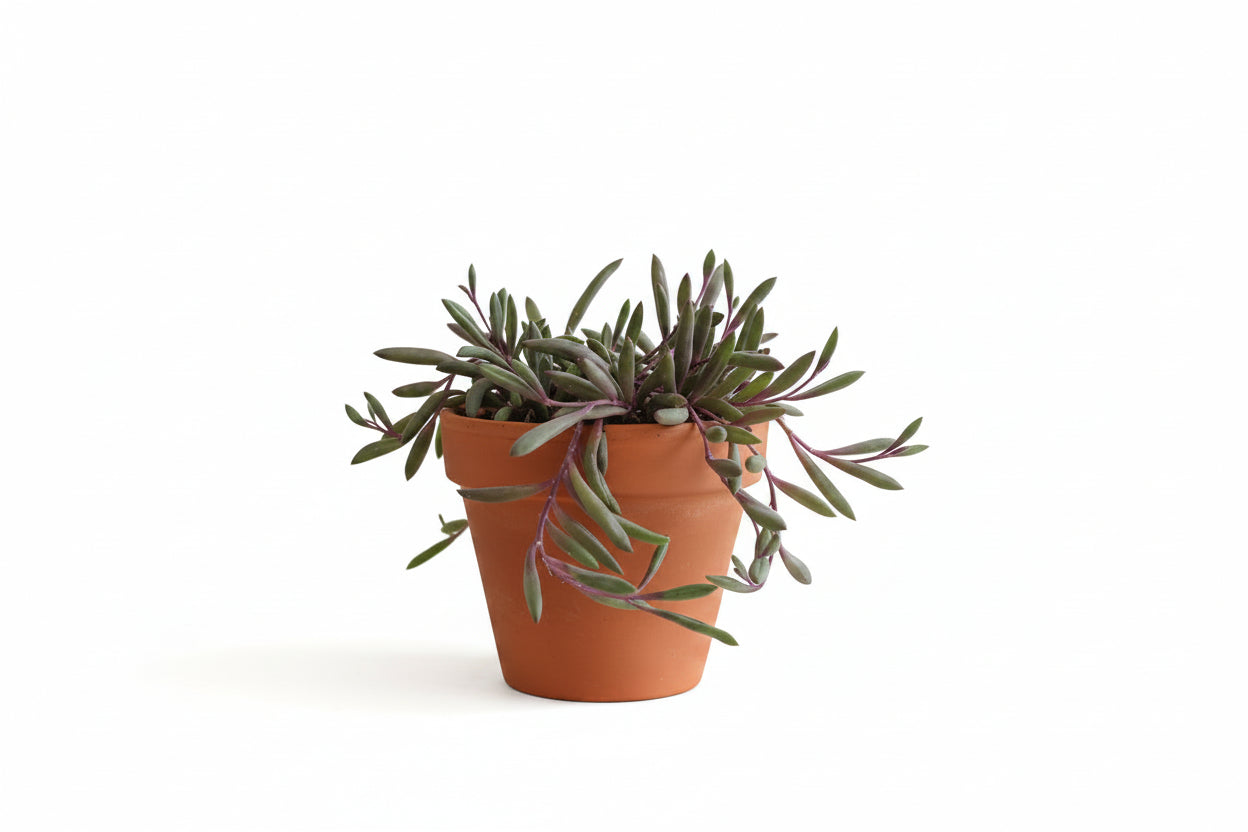
Ruby Necklace Succulent (4")
Ruby Necklace Succulent (4")
Couldn't load pickup availability
Share
Othonna capensis ‘Ruby Necklace’
Add trailing color and texture to containers with Ruby Necklace, a unique succulent known for its bead-like foliage, rich purple-red stems, and bright yellow daisy-like flowers.
This easy-care plant is especially beautiful spilling over hanging baskets, mixed containers, window boxes, and raised planters. Its foliage can deepen from green to burgundy or ruby tones when grown in bright light, giving it interest even when it is not in bloom.
Plant at a Glance
Botanical Name: Othonna capensis
Common Name: Ruby Necklace
Plant Type: Trailing succulent / tender perennial
Annual or Perennial: Perennial in warm, frost-free climates; often grown as an annual or container plant in colder areas
Evergreen or Deciduous: Evergreen in frost-free conditions
USDA Hardiness Zones: Generally 9–11, with cold protection recommended in colder portions of Zone 9
Mature Height: Approximately 2–4 inches tall
Mature Spread / Trail: Approximately 1–3 feet long
Growth Habit: Trailing, cascading and succulent
Growth Rate: Moderate to fast in warm weather
Sunlight: Full sun to bright partial sun
Water Needs: Low to moderate
Foliage: Green to burgundy-purple, often becoming richer in brighter light
Flowers: Yes
Bloom Season: Can flower intermittently through the warm season
Flower Color: Bright yellow
Primary Feature: Ruby-colored trailing stems and succulent foliage
Why We Love Ruby Necklace
Ruby Necklace gives containers something extra: color from the foliage, movement from the cascading stems, and cheerful yellow flowers.
It looks especially good when allowed to spill naturally over the edge of a pot rather than being kept clipped.
Sunlight Requirements
Ruby Necklace performs best in:
Full sun
or
Bright partial sun
Brighter light generally encourages stronger burgundy and ruby coloration.
Too much shade may cause the foliage to stay greener and the stems to become more stretched.
Wright’s Market Recommendation
In southeast Georgia, morning sun with bright light through the day works beautifully.
In intense reflected afternoon heat, some protection can help prevent stress, especially in containers that dry quickly.
Watering
Ruby Necklace is a succulent and prefers to dry slightly between waterings.
Immediately After Planting
Water thoroughly after planting, then allow the soil to begin drying before watering again.
During the Growing Season
Water when the top portion of the soil feels dry.
Container plants may need more frequent watering during extreme summer heat, but avoid keeping the soil constantly wet.
Once Established
Ruby Necklace is relatively drought tolerant.
Overwatering is a much greater concern than underwatering.
Fertilization
Feed lightly in spring and summer.
Use a balanced, diluted liquid fertilizer or a slow-release container fertilizer according to package directions.
Avoid heavy feeding, which can encourage overly soft growth.
Planting Instructions
- Choose a container or planting location with excellent drainage.
- Use a well-drained potting mix, preferably one suited to succulents.
- Remove the plant gently from its container.
- Position it at the same depth it was growing previously.
- Backfill around the roots.
- Water thoroughly.
- Allow excess water to drain completely.
Soil
Ruby Necklace prefers:
Fast-draining soil
Succulent or cactus-style potting mix
Soil that does not remain wet
Excellent drainage is essential.
Pruning & Maintenance
Ruby Necklace is very easy to maintain.
Trim stems as needed to:
- Control length
- Encourage fuller branching
- Remove damaged growth
- Keep containers looking tidy
Cuttings can also root easily, making the plant simple to propagate.
Does Ruby Necklace Flower?
Yes.
Ruby Necklace produces small, bright yellow daisy-like flowers.
Bloom Season
Flowering may occur intermittently through spring, summer, and fall when plants receive strong light and warm temperatures.
Evergreen or Deciduous?
Ruby Necklace is evergreen in frost-free climates.
In colder weather, growth may slow significantly, and frost can damage or kill exposed foliage.
Zone 9 / Coastal Georgia Performance
Ruby Necklace can perform well in southeast Georgia during the warm season, especially in containers.
In Zone 9a, winter survival can depend on the severity of the cold and the planting location.
Wright’s Market Recommendation
For the most dependable performance, treat Ruby Necklace as a container succulent that can be moved or protected during freezes.
A covered porch, greenhouse, or protected patio can help it overwinter successfully.
Landscape & Container Uses
Ruby Necklace is perfect for:
- Hanging baskets
- Mixed containers
- Window boxes
- Raised planters
- Succulent bowls
- Patio pots
- Porch containers
- Rock gardens in protected climates
- Spilling over retaining walls
Beautiful Plant Pairings
Ruby Necklace pairs beautifully with:
Succulents
Echeveria
Sedum
String of Pearls
Aloe
Kalanchoe
Container Accents
Sweet potato vine
Carex
Blue Evolvulus
Trailing annuals
Wright’s Market Designer Combination
Try:
Ruby Necklace + pale green succulents + white flowers + a neutral stone or terracotta pot
The burgundy stems and yellow blooms create beautiful contrast without making the container feel overly busy.
Why Wright’s Market Loves It
We love Ruby Necklace because it gives you color even when it is not flowering.
It is:
Trailing
Colorful
Low maintenance
Drought tolerant
Beautiful in containers
Easy to propagate
Perfect for adding movement
Wright’s Market Plant Tip
Give Ruby Necklace bright light and excellent drainage for the richest ruby coloration and healthiest growth.
Please note: Foliage color, trailing length, bloom frequency, and winter performance vary depending on light, temperature, and growing conditions.